
☰
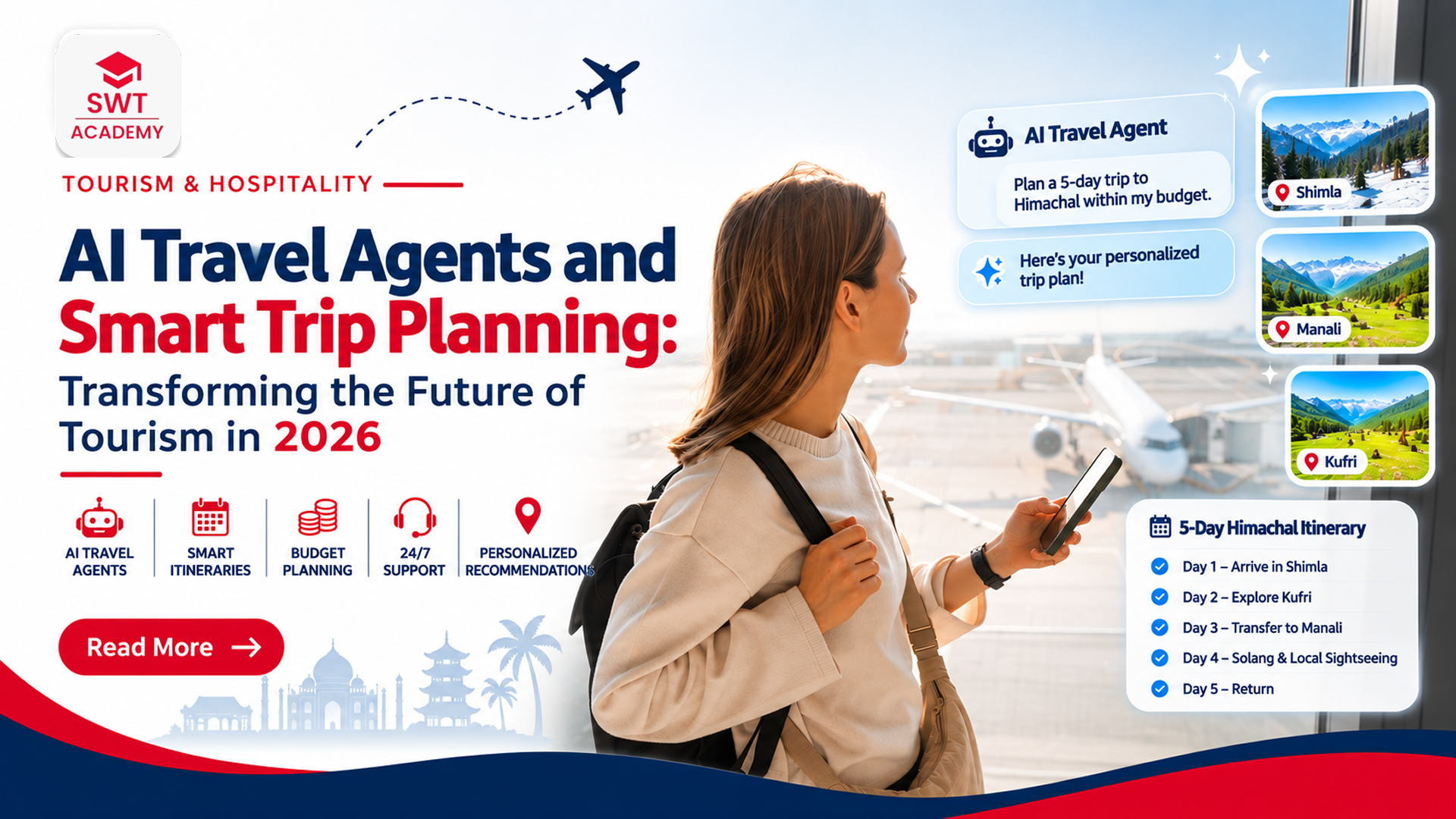
The tourism industry is entering a new era of digital transformation, and Artificial Intelligence (AI) is playing a major role in changing how people plan, book, and experience their journeys. From recommending destinations to creating personalized itineraries, AI-powered travel agents are making travel planning faster, smarter, and more convenient.
In 2026, travellers increasingly expect personalized recommendations, quick assistance, and seamless booking experiences. AI is helping tourism companies, travel agencies, airlines, and hotels respond to these changing expectations.
AI travel agents are digital tools powered by artificial intelligence that assist travellers with different stages of their journeys. They can understand travel preferences, answer questions, suggest destinations, compare options, and help create customized travel itineraries.
Unlike traditional travel planning, which often involves searching multiple websites and comparing information manually, AI-powered tools can bring many planning tasks together in one place.
For example, a traveller can ask an AI assistant to plan a five-day trip to Himachal Pradesh within a specific budget, including accommodation, sightseeing, transportation, and local experiences. The tool can then suggest an itinerary based on the information provided.
Every traveller has different interests, budgets, and expectations. Some prefer adventure activities, while others enjoy cultural experiences, luxury stays, or peaceful nature retreats.
AI can use the preferences provided by travellers to recommend suitable destinations, activities, accommodations, and travel experiences. This makes trip planning more relevant and convenient.
Creating a detailed travel itinerary can be time-consuming. AI tools can help organize destinations, sightseeing activities, transportation options, and estimated travel times into a structured daily plan.
For instance, someone planning a trip to Rajasthan can receive suggestions for exploring Jaipur, Udaipur, and Jaisalmer, with activities organized according to the duration of the trip and personal interests.
However, travellers should verify travel times, opening hours, entry fees, and current availability before finalizing their plans.
Budget is one of the most important factors influencing travel decisions. AI can help travellers estimate expenses, compare accommodation categories, explore different transportation options, and identify ways to manage their spending.
By providing a budget range and travel preferences, users can receive suggestions that help them plan more efficiently without compromising their main travel priorities.
Actual prices and availability should always be checked with airlines, hotels, and booking platforms.
AI chatbots are helping tourism businesses provide customer support beyond traditional working hours. Travellers can ask questions about booking procedures, cancellation policies, hotel facilities, baggage rules, and destination information.
These tools can reduce waiting times and help travel companies manage routine customer enquiries more efficiently. For complex problems, refunds, or urgent travel disruptions, human support remains essential.
AI-powered travel platforms can help users compare flights, hotels, and travel packages according to their preferences. Some systems also provide personalized recommendations based on search behaviour and previous choices.
This allows travellers to evaluate multiple options more easily. However, AI recommendations do not guarantee the lowest price, and final booking details should always be confirmed through the relevant provider.
AI can also support travellers after their journeys begin. Depending on the tools and information available, digital assistants can help users understand local transport, discover nearby attractions, translate basic phrases, and reorganize itineraries when plans change.
For example, if rain affects an outdoor sightseeing plan, an AI assistant may suggest museums, indoor attractions, or alternative activities.
Travellers should still rely on official sources for critical updates involving weather warnings, transport disruptions, visa requirements, and safety information.
AI is creating new opportunities for tourism businesses and travellers alike.
For travel agencies, AI can become a valuable assistant for preparing itinerary drafts, answering frequently asked questions, and organizing customer requests.
Despite its advantages, AI travel planning also has certain limitations.
Accuracy of information: AI may provide outdated or incorrect information about prices, opening hours, transport schedules, or travel rules.
Data privacy: Travellers should be careful when sharing passport details, payment information, personal documents, or other sensitive data with digital tools.
Lack of human understanding: AI may not fully understand emotional preferences, unusual requests, or complicated situations that require personal attention.
Dependence on technology: Internet connectivity, tool limitations, and unavailable booking integrations can affect the usefulness of AI assistance.
Therefore, the best approach is to combine AI-powered convenience with human judgment and verified information.
The future of tourism is likely to involve closer collaboration between AI technology and human travel professionals. As digital assistants become more capable, they may help travellers manage more parts of a journey, from initial inspiration to itinerary adjustments and booking-related tasks.
Travel agencies can use these developments to provide more customized services, improve operational efficiency, and offer better customer experiences. At the same time, travel consultants will continue to play an important role in providing expert advice, resolving complex issues, and building customer trust.
AI is not simply replacing traditional travel planning; it is changing how travel professionals and travellers work together.
AI travel agents and smart trip planning are becoming important parts of the modern tourism landscape. By offering personalized recommendations, itinerary assistance, budget planning, and digital customer support, AI is making travel planning more accessible and efficient.
However, technology works best when combined with accurate information, responsible data practices, and human expertise. In 2026 and beyond, tourism businesses that balance intelligent digital tools with personalized service will be better positioned to meet the changing expectations of travellers.
The future of travel is not just about reaching a destination; it is about making the entire journey smarter, smoother, and more personalized.