
☰
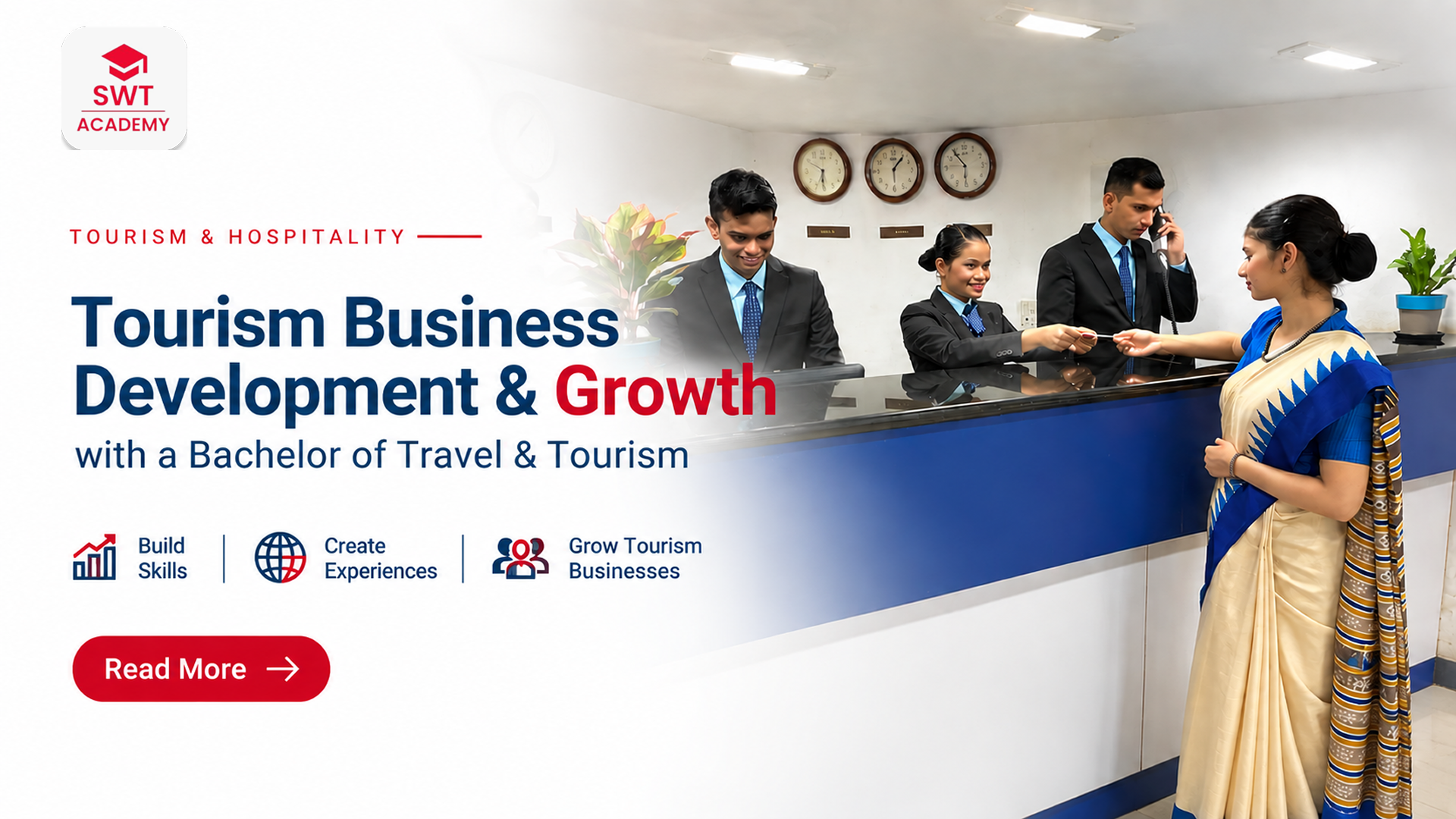
The tourism industry is one of the world's most dynamic and rapidly evolving sectors. From travel agencies and hotels to tour operations, destination management, airlines, and experiential travel companies, tourism creates opportunities for both employment and entrepreneurship. As travelers increasingly look for personalized, sustainable, and memorable experiences, businesses need skilled professionals who understand both tourism and modern business practices.
A Bachelor of Travel and Tourism can provide students with the knowledge and practical skills needed to contribute to tourism business development and long-term growth.
Tourism is much more than visiting attractive destinations. It is a complex business ecosystem involving transportation, accommodation, food and beverages, attractions, travel services, technology, marketing, and destination management.
A successful tourism professional needs to understand how these different components work together. A Bachelor of Travel and Tourism introduces students to areas such as tourism management, travel operations, hospitality, destination planning, customer service, marketing, and tourism economics.
This broad understanding can help graduates identify business opportunities and respond effectively to changing customer expectations.
The tourism sector offers numerous opportunities for entrepreneurship. Graduates can explore businesses such as travel agencies, tour companies, destination-management services, travel consulting, event tourism, adventure tourism, and specialized travel experiences.
During a bachelor's degree, students can develop skills in business planning, market research, budgeting, customer relationship management, and service development. These skills can help turn a tourism idea into a structured business venture.
Marketing plays an important role in attracting travelers and building a recognizable tourism brand. Today's tourism businesses use websites, social media, online travel platforms, content marketing, and digital advertising to reach potential customers.
A Bachelor of Travel and Tourism can help students understand consumer behavior and tourism marketing strategies. Graduates can apply this knowledge to promote destinations, design travel packages, attract new customer segments, and strengthen brand visibility.
Modern travelers increasingly value experiences rather than simply visiting a destination. Businesses are therefore developing customized tours, cultural experiences, wellness travel, adventure activities, culinary tourism, and other specialized offerings.
Students with tourism education can learn how to research traveler preferences and develop products around those interests. Innovation can help tourism businesses differentiate themselves in competitive markets.
Sustainability has become an important consideration for tourism businesses and destinations. Responsible tourism aims to balance economic benefits with environmental protection and the well-being of local communities.
A tourism degree can introduce students to concepts such as sustainable destination management, responsible travel, conservation, and community participation. These concepts can help future tourism professionals develop business models that consider both profitability and long-term destination sustainability.
Technology has transformed the way people search, plan, book, and experience travel. Online booking systems, mobile applications, digital payments, artificial intelligence, data analytics, and social media have become important parts of the tourism ecosystem.
Understanding technology can help tourism graduates identify opportunities to improve customer experiences and business efficiency. For example, tourism companies can use customer data to understand demand, personalize offers, and improve marketing decisions.
A bachelor's degree in travel and tourism can open career paths across different segments of the industry. Depending on their interests and additional skills, graduates may pursue roles such as:
The degree can also provide a foundation for postgraduate study in tourism management, hospitality management, business administration, or related fields.
For students interested in entrepreneurship, the tourism sector offers opportunities to develop businesses around specific customer needs. The process can begin with identifying a market gap and researching the target audience.
For example, an entrepreneur might create specialized experiences for adventure travelers, heritage enthusiasts, families, corporate groups, or international visitors. The next steps could include developing a business model, establishing partnerships, creating pricing strategies, building a digital presence, and delivering consistent customer service.
The combination of tourism knowledge and business skills can help graduates approach these challenges systematically.
Tourism is a people-oriented industry, so classroom knowledge alone is not always enough. Internships, industry visits, projects, fieldwork, and practical training can help students understand how tourism businesses operate in real-world environments.
Practical exposure can also help students develop communication, teamwork, problem-solving, negotiation, and customer-service skills—qualities that are valuable across the tourism industry.
The future of tourism is likely to be shaped by changing traveler expectations, technology, sustainability, personalization, and emerging destinations. Tourism businesses that understand their customers and adapt to these changes can identify new opportunities for growth.
This makes professional education increasingly valuable. A Bachelor of Travel and Tourism can provide students with a foundation in tourism operations, management, marketing, entrepreneurship, and destination development while helping them understand the broader forces shaping the industry.
Tourism business development requires more than a passion for travel. It requires knowledge of customers, markets, operations, finance, marketing, technology, sustainability, and business strategy.
A Bachelor of Travel and Tourism can help aspiring professionals build this foundation and prepare for careers or entrepreneurial opportunities across the tourism sector. Whether the goal is to manage a travel company, develop innovative travel experiences, promote destinations, or start a tourism venture, the degree can be an important step toward building a career in this growing industry.
For students who enjoy travel, business, creativity, and working with people, studying Travel and Tourism can provide a pathway to explore a diverse and evolving global industry.