
☰
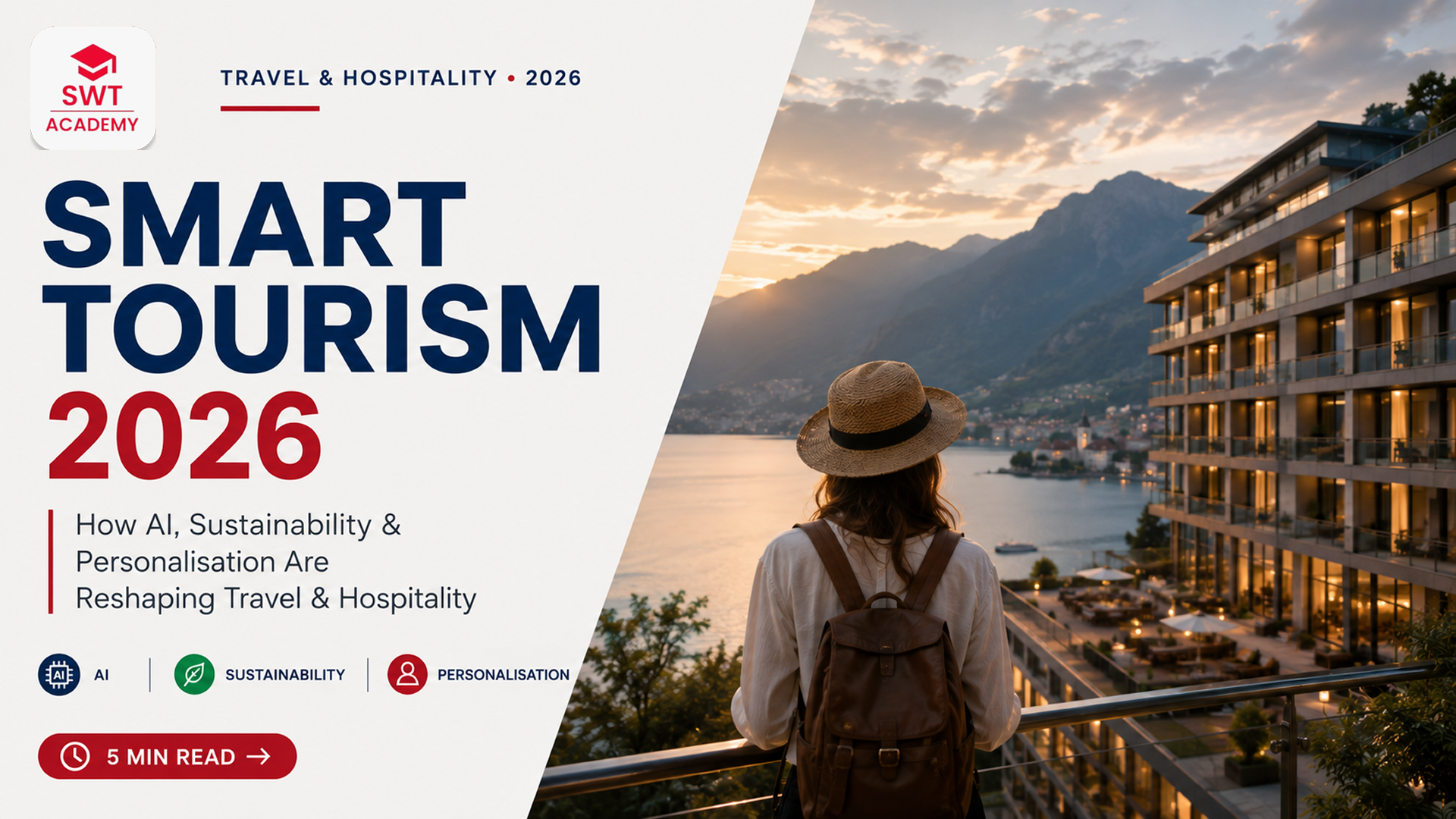
Tourism is no longer simply about visiting a destination, staying in a hotel, and returning home.
Today, travellers expect personalised experiences, seamless technology, responsible tourism, authentic local interactions, and greater value from every journey.
From AI-powered travel planning to sustainable hotels and smart hospitality, the tourism industry is rapidly changing.
For travel and hospitality professionals, this transformation creates both challenges and exciting opportunities.
The question is no longer:
“Where are people travelling?”
It is also:
“How are they travelling, what do they expect, and how can businesses create better experiences?”
Here are some of the latest tourism and hospitality trends shaping the industry in 2026.
Artificial Intelligence has become one of the most significant technologies influencing tourism.
Travellers can increasingly use AI-powered tools to:
For travel companies, AI can also support customer service, marketing, data analysis, sales, and operational efficiency.
However, technology does not eliminate the need for travel professionals.
Instead, it changes their role.
Professionals who understand AI tools + travel knowledge + customer needs can use technology to provide faster and more personalised services.
The future belongs to professionals who know how to work with technology rather than compete against it.
Travellers increasingly want trips designed around their individual interests.
A family holiday, solo adventure, luxury escape, wellness retreat, business trip, and student travel experience all require different approaches.
Modern travel businesses are therefore focusing on:
Instead of asking customers to choose from a fixed package, businesses are increasingly creating experiences around the traveller.
This shift is making personalisation a major competitive advantage in tourism.
Sustainability has become an increasingly important consideration for travellers and hospitality businesses.
Modern travellers are becoming more conscious about the environmental and social impact of their journeys.
This is encouraging tourism businesses to explore:
Hotels and resorts are also looking for ways to reduce their environmental footprint while maintaining guest comfort.
Sustainable tourism is therefore not only about protecting destinations.
It is also about creating long-term value for travellers, businesses, local communities, and the environment.
Travellers increasingly want to do more than simply see famous attractions.
They want to experience destinations.
This could include:
For example, instead of simply visiting a destination known for its cuisine, travellers may want to learn how local dishes are prepared.
Instead of simply visiting a cultural attraction, they may want to interact with the local community.
This is creating opportunities for tourism professionals to become experience designers, not just itinerary planners.
Health, relaxation, fitness, mindfulness, and personal wellbeing are becoming increasingly connected with travel.
Travellers are seeking experiences that help them:
This is supporting the growth of wellness tourism, including resorts, retreats, spas, yoga experiences, nature stays, and wellness-focused holidays.
Hotels and destinations that understand the connection between travel and wellbeing can create highly differentiated guest experiences.
The boundaries between business and leisure travel are becoming increasingly flexible.
A professional travelling for a business meeting may extend the trip to explore the destination.
A conference attendee may add a weekend holiday.
A corporate traveller may combine work commitments with family travel.
This has created opportunities for bleisure travel.
Travel professionals can design packages combining:
This trend is creating new possibilities for corporate travel companies, hotels, tour operators, and destination management companies.
Technology is also transforming hotel operations.
Modern hospitality businesses are increasingly adopting digital solutions such as:
Technology can make hotel operations faster and more convenient.
But hospitality remains a people-focused industry.
Guests still value warmth, empathy, communication, and genuine service.
The most successful hotels will therefore combine smart technology with human hospitality.
Social media has changed how people discover destinations, hotels, restaurants, and travel experiences.
Instagram, YouTube, short-form videos, travel creators, online reviews, and user-generated content can influence destination decisions.
A visually attractive hotel or unique travel experience can quickly gain attention online.
This means tourism and hospitality professionals increasingly need to understand:
A strong digital presence can help a destination or hospitality brand reach travellers long before they make a booking.
Travellers are increasingly looking for experiences that feel authentic rather than overly commercial.
They may prefer:
This creates opportunities for smaller tourism businesses and local communities.
It also highlights the importance of destination knowledge and cultural understanding for future tourism professionals.
The ability to connect visitors with the authentic character of a destination can become a valuable professional skill.
The changing tourism industry is creating career opportunities beyond traditional hotel and travel jobs.
Professionals can explore careers in:
As technology and tourism become increasingly connected, new roles are also emerging around digital transformation, customer experience, revenue management, sustainability, and travel technology.
The tourism professional of the future will need more than destination knowledge.
Important skills include:
The strongest professionals will combine technical knowledge with human skills.
Technology may help organise a journey, but understanding people is what creates memorable experiences.
Tourism and hospitality are highly practical industries.
Students need opportunities to understand how the industry actually works through:
The Tourism & Hospitality programs offered under Tata Institute of Social Sciences School of Skill Education (SSE), facilitated by SWT Academy, focus on practical and industry-oriented learning through skill development, industry exposure, internships, and professional grooming.
This approach can help students prepare for careers across travel, tourism, hotels, airlines, events, hospitality, destination management, and emerging travel businesses.
The tourism industry is entering a new era.
Artificial Intelligence is becoming smarter.
Travellers are becoming more conscious.
Personalisation is becoming more important.
Sustainability is becoming a priority.
Hospitality is becoming more digital.
And experiences are becoming more meaningful.
But one thing remains constant:
People still want to feel welcomed, understood, and valued.
The future of tourism will therefore not be completely digital.
It will be a combination of:
Technology + Human Connection + Personalisation + Sustainability + Experience
The professionals who understand this combination will be better prepared for the changing tourism and hospitality landscape.
Tourism in 2026 is about much more than travelling from one destination to another.
It is about how people discover destinations, how technology supports their journey, how responsibly they travel, and how businesses create meaningful experiences.
For students and aspiring tourism and hospitality professionals, these changes represent exciting career possibilities.
The industry needs professionals who can work with technology, understand travellers, deliver excellent service, think creatively, and adapt to changing market expectations.
Through the Tourism & Hospitality programs offered under Tata Institute of Social Sciences School of Skill Education (SSE), facilitated by SWT Academy, students can develop practical knowledge, industry exposure, and professional skills to prepare for the future of tourism and hospitality.
Because the future of tourism is not simply about where people travel. It is about creating smarter, more sustainable, personalised, and unforgettable experiences.