
☰
Imagine checking into your hotel without waiting at the reception.
Your room unlocks with your smartphone, Artificial Intelligence recommends nearby attractions based on your interests, and a virtual assistant helps you book restaurants, transportation, and local experiences—all within minutes.
This is no longer the future. It is becoming the new standard across the global hospitality industry.
Technology is revolutionizing hotels, resorts, restaurants, airlines, and tourism businesses by making travel smarter, faster, and more personalized. Today's guests expect seamless digital experiences, personalized services, and instant assistance wherever they travel.
From Artificial Intelligence and smart hotel rooms to contactless services and data-driven guest experiences, technology is reshaping every aspect of hospitality.
As hotels and tourism businesses continue to adopt digital innovation, the demand for skilled hospitality professionals is also increasing.
Students can prepare for this evolving industry through the Tourism & Hospitality programs offered under Tata Institute of Social Sciences School of Skill Education (SSE), facilitated by SWT Academy.
If you're passionate about hospitality, customer service, technology, and global career opportunities, this industry offers endless possibilities.
The hospitality sector is evolving rapidly. Here are the biggest innovations shaping hotels and tourism businesses around the world.
Artificial Intelligence is helping hotels deliver highly personalized guest services.
Hotels now use AI to understand customer preferences, recommend room upgrades, provide travel suggestions, and answer guest queries instantly through virtual assistants.
AI is improving hospitality by:
Technology allows hotels to deliver better service while improving operational efficiency.
Guests now expect convenience with minimal waiting time.
Many hotels have introduced digital check-ins, mobile room keys, online payments, QR-code menus, and self-service kiosks to create a smoother guest experience.
Popular contactless services include:
These services improve convenience while enhancing guest satisfaction.
Modern hotel rooms are becoming more intelligent than ever.
Guests can now control lighting, air conditioning, entertainment systems, and curtains using smartphones or voice assistants.
Smart room features include:
These innovations provide greater comfort while reducing operational costs.
Hospitality businesses collect valuable guest insights to improve their services.
By analysing booking patterns, guest feedback, and travel preferences, hotels can create customized experiences and improve customer loyalty.
Data helps hotels:
Data-driven decisions are becoming essential for hospitality success.
Technology is also supporting environmentally responsible hospitality.
Hotels are reducing waste and conserving energy through smart systems that monitor electricity, water consumption, and resource management.
Examples include:
Sustainable innovation helps businesses reduce costs while protecting the environment.
Hospitality businesses are increasingly using digital platforms to reach global travellers.
Hotels promote their services through social media, search engines, influencer collaborations, and personalized email campaigns.
Key digital marketing tools include:
A strong online presence has become essential for attracting modern travellers.
As hospitality businesses become more digital, protecting guest information has become a top priority.
Hotels invest heavily in secure payment systems, encrypted databases, and data protection measures to build customer trust.
Key security practices include:
Guest trust remains one of the most valuable assets in hospitality.
The hospitality industry now looks beyond traditional customer service skills.
Employers increasingly seek professionals who understand digital tools, communication technologies, data analysis, customer relationship management, and modern hospitality software.
Career opportunities include:
Professionals with both hospitality knowledge and digital skills enjoy stronger career growth.
Success in today's hospitality industry requires practical learning alongside academic knowledge.
Students need real-world exposure, professional communication, digital awareness, and industry experience to meet employer expectations.
The Tourism & Hospitality programs offered under Tata Institute of Social Sciences School of Skill Education (SSE), facilitated by SWT Academy, focus on:
This approach prepares students for careers across hotels, airlines, tourism companies, luxury resorts, cruise lines, and global hospitality brands.
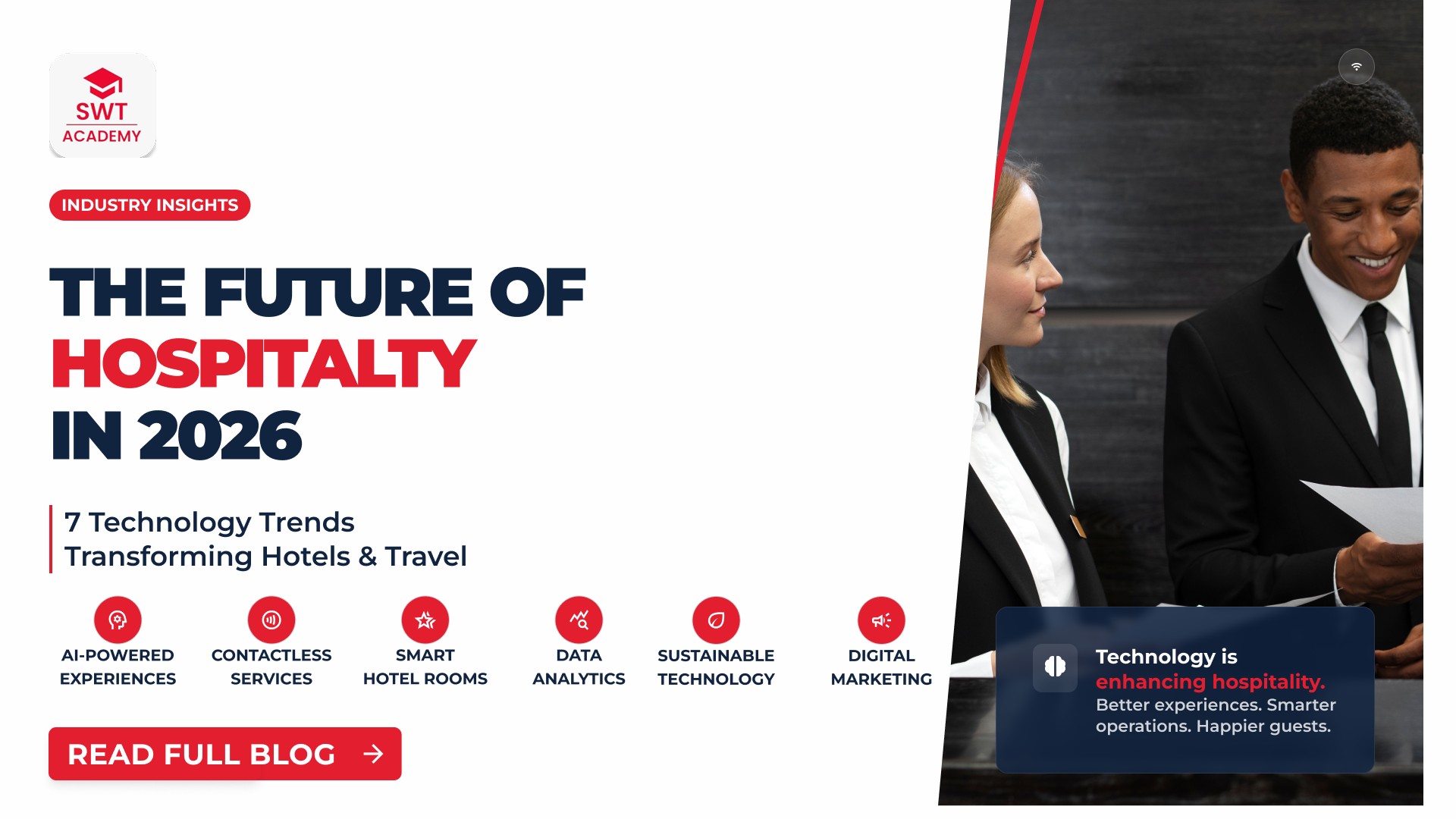
Technology is no longer replacing hospitality—it is enhancing it.
Artificial Intelligence is personalizing guest experiences.
Smart hotels are improving comfort.
Digital marketing is expanding business opportunities.
Data analytics is strengthening customer relationships.
Sustainable technologies are making hospitality more responsible.
Together, these innovations are creating a smarter, more efficient, and guest-focused hospitality industry.
The hospitality industry is entering a new era where technology and human service work together to create exceptional guest experiences.
Hotels, resorts, airlines, restaurants, and tourism businesses are investing in innovation to meet the changing expectations of modern travellers.
For students looking to build a future in one of the world's fastest-growing industries, developing hospitality skills along with digital knowledge can open doors to exciting national and international career opportunities.
Through the Tourism & Hospitality programs offered under Tata Institute of Social Sciences School of Skill Education (SSE), facilitated by SWT Academy, students gain practical training, industry exposure, and the confidence needed to succeed in the modern hospitality industry.
The future belongs to hospitality professionals who are ready to combine technology, service excellence, and innovation to deliver unforgettable guest experiences.